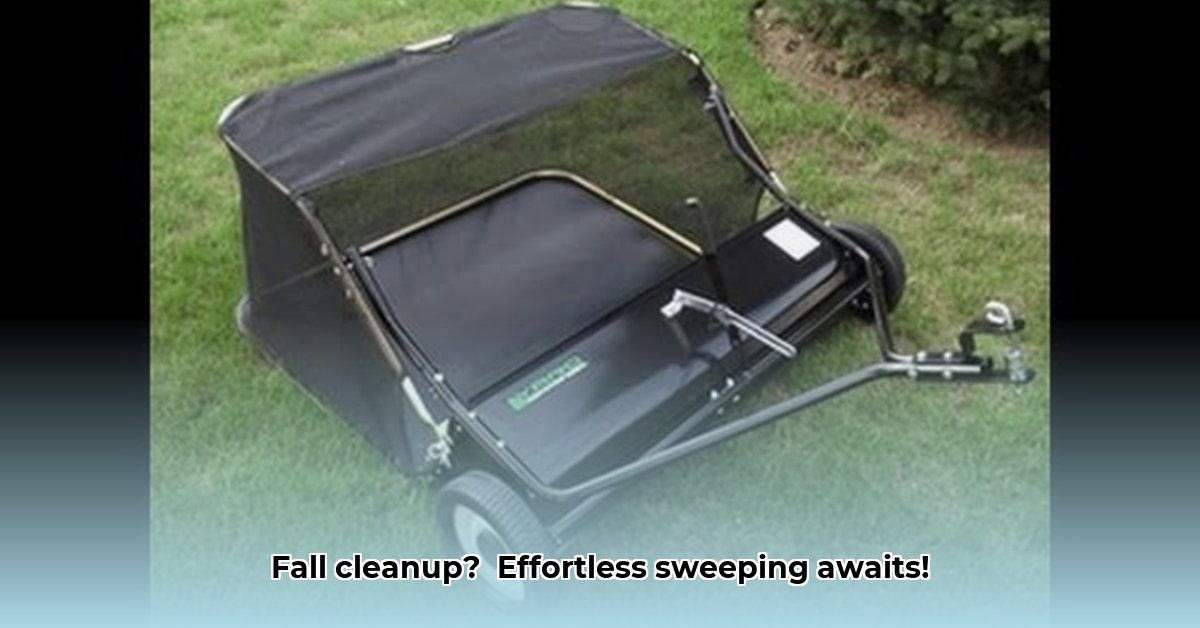
Autumn's arrival paints the landscape with vibrant hues, but it also brings a surge of fallen leaves and yard debris. Instead of spending countless hours raking, consider the efficiency and eco-friendliness of a push lawn sweeper from Tractor Supply. This guide will empower you to select, use, and maintain the perfect sweeper for your yard, minimizing your environmental impact while maximizing your free time. For more options, check out these lawn tractor baggers.
Assessing Your Needs: Choosing the Right Sweeper
Before venturing to Tractor Supply, thoroughly evaluate your yard work requirements. This critical step ensures you invest in a sweeper that perfectly matches your needs and budget.
Yard Size and Debris Type: How large is your lawn? What kind of debris do you typically manage – delicate leaves, stubborn twigs, or a mix? This directly impacts the sweeper's required capacity and durability. For instance, a small yard with primarily leaves might only need a 6 cubic foot capacity, while a larger yard with heavy debris could benefit from a 12+ cubic foot model.
Budget Considerations: Push lawn sweepers range significantly in price. Establish a realistic budget before browsing to prevent impulse purchases. Remember that a higher price doesn't always equate to superior quality or sustainability, so carefully compare features at diverse price points.
Terrain Analysis: The terrain of your yard also plays a crucial role. A flat, smooth lawn is easily managed by any model, but uneven terrain might demand a sweeper with larger wheels for better maneuverability. Consider the added effort required to navigate hills or uneven patches.
Comparing Key Features: A Data-Driven Approach
Tractor Supply provides a range of push lawn sweepers, each possessing unique strengths and weaknesses. The following table highlights essential features to consider when making your selection:
| Feature | Model A (Example) | Model B (Example) | Considerations |
|---|---|---|---|
| Capacity (cu ft) | 10 | 15 | Larger capacity means fewer trips to empty the hopper; consider your yard size and debris volume. |
| Weight (lbs) | 25 | 35 | Lighter sweepers are easier to maneuver, but heavier models may handle denser debris more effectively. |
| Material | Steel | High-impact Plastic | Consider durability—steel is robust but heavier, plastic is lighter but might not be as long-lasting. Check for recycled content. |
| Price ($) | 75 | 125 | Balance cost with longevity and desired features; prioritize durability for a longer-lasting, more sustainable choice. |
| Wheel Size (in) | 10 | 12 | Larger wheels enhance maneuverability on uneven terrain. |
| Handle Adjustability | Yes | No | Adjustable handles improve comfort and usability for users of different heights. |
Remember to consult user reviews before making a final decision. These insights can highlight real-world experiences and help validate your choice. Does a rhetorical question like, "Is it worth it to pay more for a higher-capacity model?" help guide your decision-making process?
A Step-by-Step Usage Guide: Maximizing Efficiency and Safety
Using your new push lawn sweeper is intuitive, but following these simple steps ensures optimal performance and safety:
Pre-Sweep Preparation: Remove any large obstacles from your lawn to prevent damage to the sweeper and ensure a smooth operation.
Assembly (if necessary): Carefully assemble the sweeper according to the manufacturer's instructions. (Most models require minimal assembly.)
Sweeping Technique: Push the sweeper steadily across your lawn, gently overlapping each pass for thorough debris collection. Avoid excessive force; let the sweeper do the work.
Hopper Management: Empty the hopper when full to maintain efficiency and prevent clogs.
Post-Sweep Cleaning: Clean any lingering debris from the brush roll and hopper to prolong the sweeper’s lifespan.
Maintenance and Care: Prolonging Your Sweeper's Lifespan
Regular maintenance significantly extends your sweeper’s lifespan and minimizes environmental impact by reducing the need for frequent replacements.
Cleaning: After each use, thoroughly clean the brush roll and hopper. A stiff brush or garden hose usually suffices.
Lubrication: Periodically lubricate moving parts according to the manufacturer’s recommendations. This helps prevent wear and tear.
Storage: Store your sweeper indoors or in a dry, covered area to protect it from the elements and prevent rust.
Disposal: When your sweeper reaches the end of its life, dispose of it responsibly according to local guidelines. Inquire about any recycling options available.
Sustainability Considerations: Advocating for Eco-Friendly Design
While push lawn sweepers are inherently more eco-friendly than gas-powered alternatives, there is always room for improvement. "The current market lacks truly sustainable sweepers made entirely from recycled materials," says Dr. Emily Carter, Environmental Engineer at the University of California, Berkeley. Advocating for manufacturers to utilize recycled materials and adopt sustainable manufacturing processes is paramount. Consider the lifecycle impact of your purchase: a durable, long-lasting sweeper is ultimately more sustainable than a cheaper model that requires frequent replacement. Buy smart, buy durable, and support brands committed to sustainability.
Ditch the Rake: Finding Your Push Sweeper at Tractor Supply
The annual ritual of yard cleanup often means hours spent wrestling with heavy tarps and unwieldy rakes, especially if your property is too small to justify a massive tow-behind tractor model. That is where the practical, efficient push lawn sweeper from Tractor Supply comes into play. TSC specializes in providing durable, no-nonsense equipment that works just as hard as you do, and their selection of walk-behind sweepers offers the perfect middle ground for suburban lots and smaller homesteads. These manual sweepers dramatically cut down the time spent dealing with scattered debris, pine needles, grass clippings, and of course, those inevitable heaps of autumn leaves, quietly depositing them neatly into an attached hopper without the noise or expense of a motorized solution.
When browsing the aisles or website at Tractor Supply, smart shoppers should pay close attention to the features that ensure longevity and ease of use. Key specifications to look out for include the brush width, which dictates how large a path you can clear with each pass, and the hopper capacity, which determines how often you will have to stop and empty your haul into the compost pile. Most TSC push sweeper options feature adjustable brush height settings, crucial for adapting to different surfaces, whether you are tackling thick grass or a paved driveway, guaranteeing maximum debris pickup. Investing in a robust model from their inventory means acquiring a reliable tool built for repeated seasonal use, providing excellent value that stands up to the demands of heavy yard work better than many flimsier, general-purpose store brands.